TL;DR
- The Roborock S8 MaxV Ultra is the best overall — it vacuums, mops, and washes its own mop pads without you ever thinking about it.
- The Eufy X10 Pro Omni gets you about 90% of the flagship experience for half the money.
- The Roomba Essential is the no-regrets entry-level pick if you’ve never owned one and want to try.
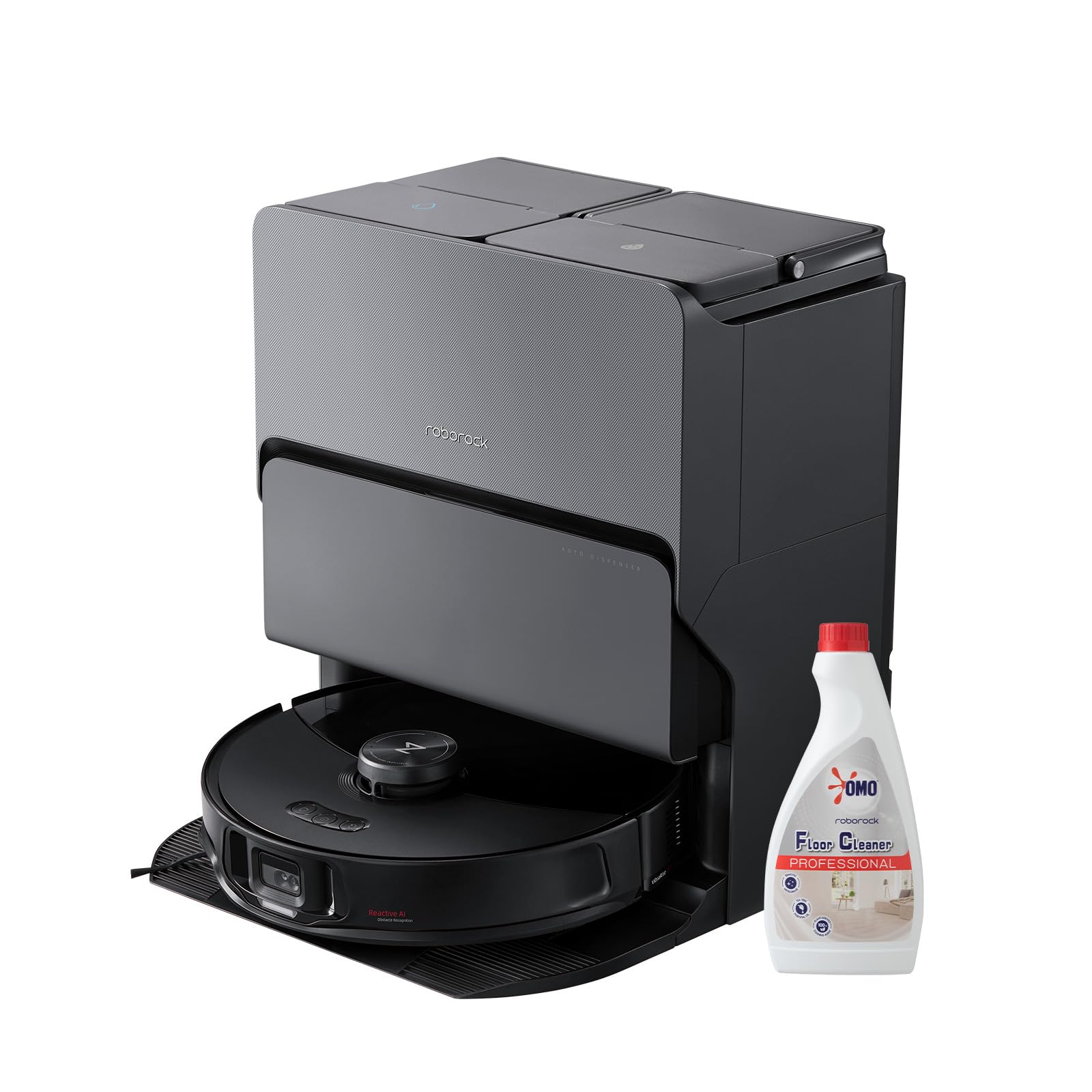
Roborock S8 MaxV Ultra
Let’s be honest about what’s happening in your house. There’s a chore chart somewhere, and yet the floors are not clean. The solution isn’t more nagging or “better communication” — it’s outsourcing the entire problem to a tiny robotic servant that doesn’t negotiate, doesn’t forget, and doesn’t need to be reminded whose turn it is. We tested seven of them for exactly that outcome.
Show comparison table
| # | Product | Price | Score | Best for |
|---|---|---|---|---|
| 1 | Roborock S8 MaxV Ultra | $1,799 | 9.5/10 | Actually forgetting vacuums exist |
| 2 | iRobot Roomba Combo j9+ | $1,399 | 9.0/10 | Trusted brand with 60-day auto-empty |
| 3 | Eufy X10 Pro Omni | $799 | 8.9/10 | Flagship features at half the price |
| 4 | Roborock Q Revo | $899 | 8.6/10 | Roborock ecosystem at a middle price |
| 5 | Shark AI Ultra Robot (RV2502AE) | $549 | 8.2/10 | Pet-heavy homes with lots of carpet |
| 6 | Dreame L20 Ultra | $1,099 | 8.1/10 | Enthusiasts who want flagship specs cheaper |
| 7 | iRobot Roomba Essential (Q0120) | $249 | 7.6/10 | First-time robot vacuum buyers |
/ 10
Read our take
The S8 MaxV Ultra is the most capable robot vacuum ever made, and it’s almost embarrassing how much stuff it does. It vacuums at 10,000 Pa. It mops. It washes and dries its own mop pads with hot water. It empties its own dustbin. It refills its own water tank. The AI cameras recognize socks, shoes, pet waste, and cables, and it actually avoids them. You set it up once and then you stop thinking about floor cleaning.
Pros
- Truly autonomous — empties, refills, washes, and dries itself
- Reactive AI obstacle avoidance that actually works on real cables
- Genuinely effective mopping with scrubbing dual spinning pads
Cons
- The base station is enormous — plan a 22-inch wide spot for it
- At $1,799 it’s a real financial decision, not an impulse buy
/ 10
Read our take
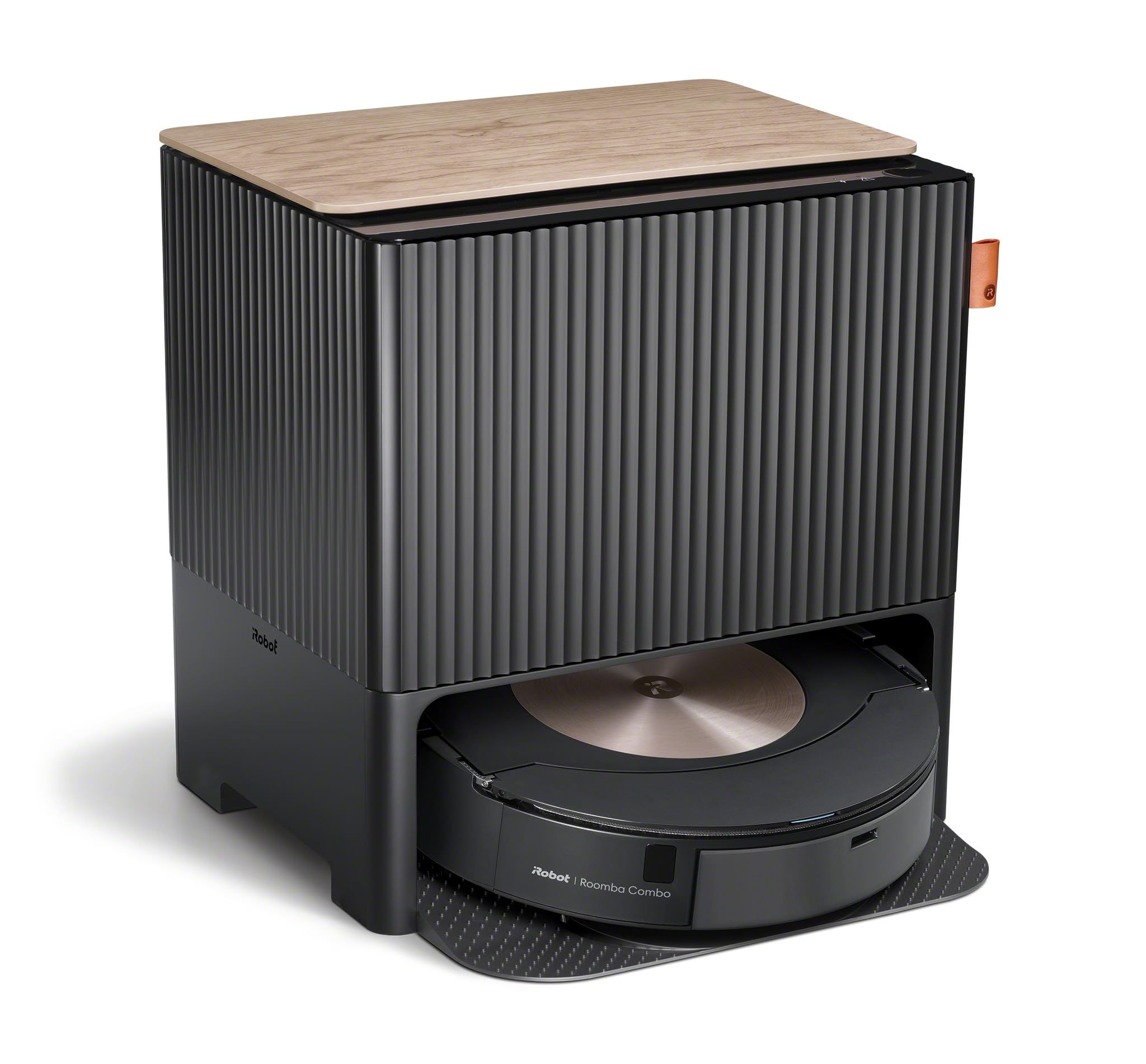
iRobot invented this category and spent two decades perfecting it. The Combo j9+ vacuums and mops, avoids obstacles via a front-facing camera, and the auto-empty dock holds 60 days of debris — which is a genuinely meaningful number if you have pets. The navigation is rock-solid and the obstacle avoidance is arguably the most trustworthy on the market. The j9+ is what you buy if you value reliability over feature count.
Pros
- Industry-leading obstacle avoidance — genuinely dodges cables and pet accidents
- Auto-empty bag holds 60 days of debris
- Long-term reliability and US-based customer support
Cons
- Mop pad doesn’t self-clean — you rinse it manually
- The iRobot app has gotten busier over years of updates
/ 10
Read our take
Eufy (owned by Anker) has been quietly making excellent robot vacuums for years, and the X10 Pro Omni is their breakthrough. It vacuums at 8,000 Pa, mops with spinning pressurized pads that actually scrub, self-empties, self-washes the mop pads, and self-dries them — at roughly half the price of the top-tier Roborock. Obstacle avoidance isn’t as smart, and the app is slightly clunkier, but you’re saving $1,000 to handle 90% of the real use case.
Pros
- Flagship features at roughly half the flagship price
- Spinning mop pads that genuinely scrub rather than smear
- Backed by Anker, which has reliable long-term support
Cons
- Obstacle avoidance is noticeably worse than the Roborock or Roomba
- Large base station takes up as much room as the flagship
/ 10
Read our take
The Q Revo is Roborock’s mid-range all-in-one, and it delivers most of the flagship experience for about half the price. It vacuums at 5,500 Pa, mops, self-empties, self-washes mop pads, and has strong LiDAR navigation. What you lose is the camera-based obstacle avoidance of the S8 MaxV Ultra, which means it’ll still occasionally get tangled in a cable on the floor. If you’re willing to do a 30-second pick-up pass before you run it, this is the sweet-spot deal.
Pros
- Most flagship features at a genuine mid-range price
- Rock-solid LiDAR navigation and room mapping
- Self-washing mop pads included
Cons
- No camera obstacle avoidance — will eat cables if you leave them out
- Lower suction than the S8 MaxV Ultra on thick carpet
/ 10
Read our take
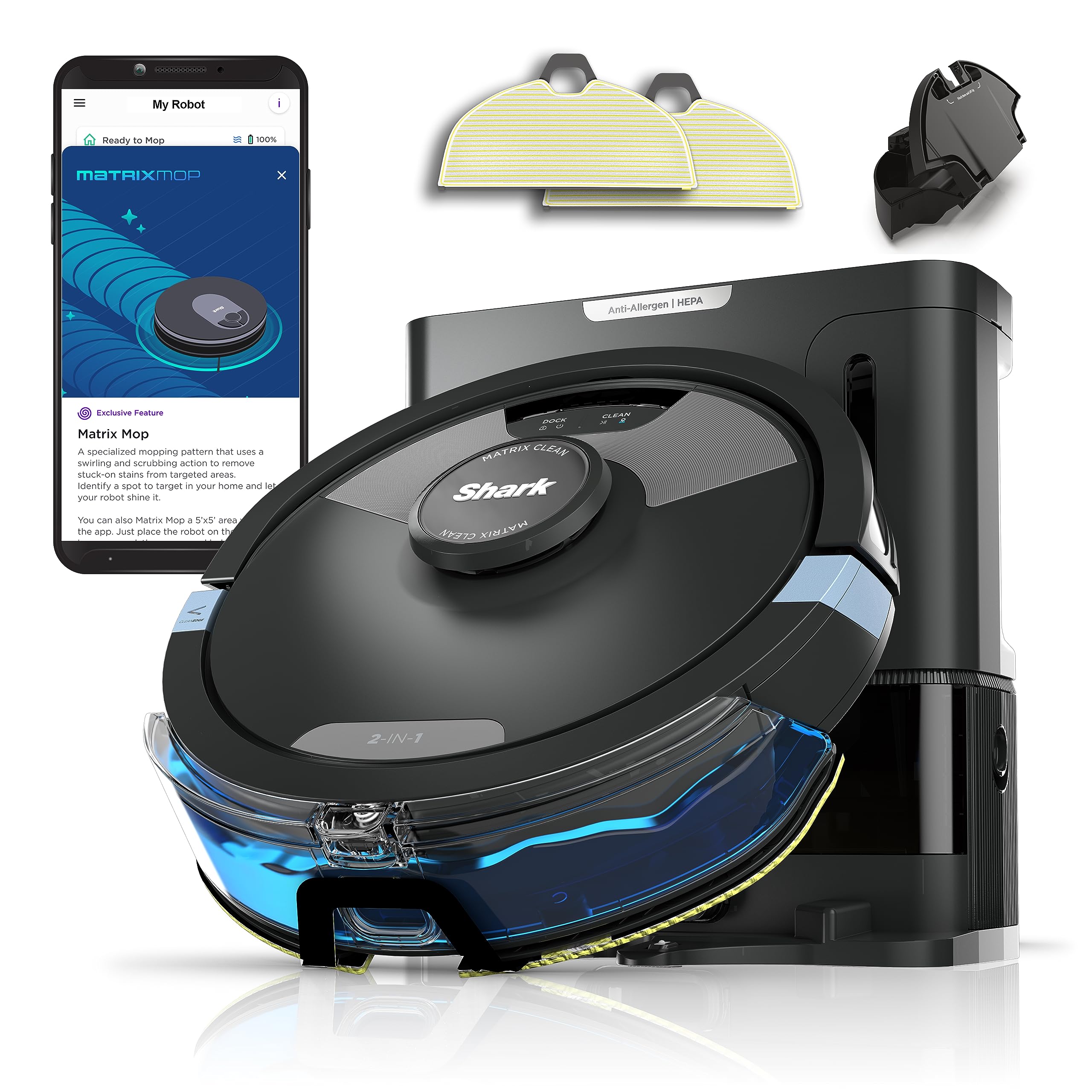
Shark’s robots are less famous than Roomba but specifically excel at one thing: deep carpet cleaning with pets. The self-cleaning brush roll actually prevents pet hair from tangling, the suction on carpet is noticeably stronger than price equivalents, and the auto-empty base holds 60 days of debris. It doesn’t mop and the navigation isn’t as refined as the top picks, but for pet-heavy, carpet-heavy homes, it’s the specialist that does its one job very well.
Pros
- Outstanding carpet performance with pet hair
- Self-cleaning brush roll — no more scissors-and-hair nightmare
- 60-day auto-empty base included
Cons
- No mopping function at all
- Navigation is less refined than Roborock or iRobot
/ 10
Read our take
Dreame has been aggressively catching up to Roborock for a few years, and the L20 Ultra is their answer to the S8 MaxV Ultra. It has self-washing mop pads, hot-water washing, self-emptying, 7,000 Pa suction, and MopExtend technology that pushes the mop out to reach corners. On spec sheets it’s basically tied with the Roborock. The real downside is software polish — the app is less refined and parts availability in some regions is spottier.
Pros
- Near-flagship specs at a meaningful discount
- Hot-water mop pad washing works as advertised
- MopExtend genuinely reaches corners other robots miss
Cons
- App and software polish lag behind Roborock and iRobot
- Spare parts harder to source outside major metro areas
/ 10
Read our take
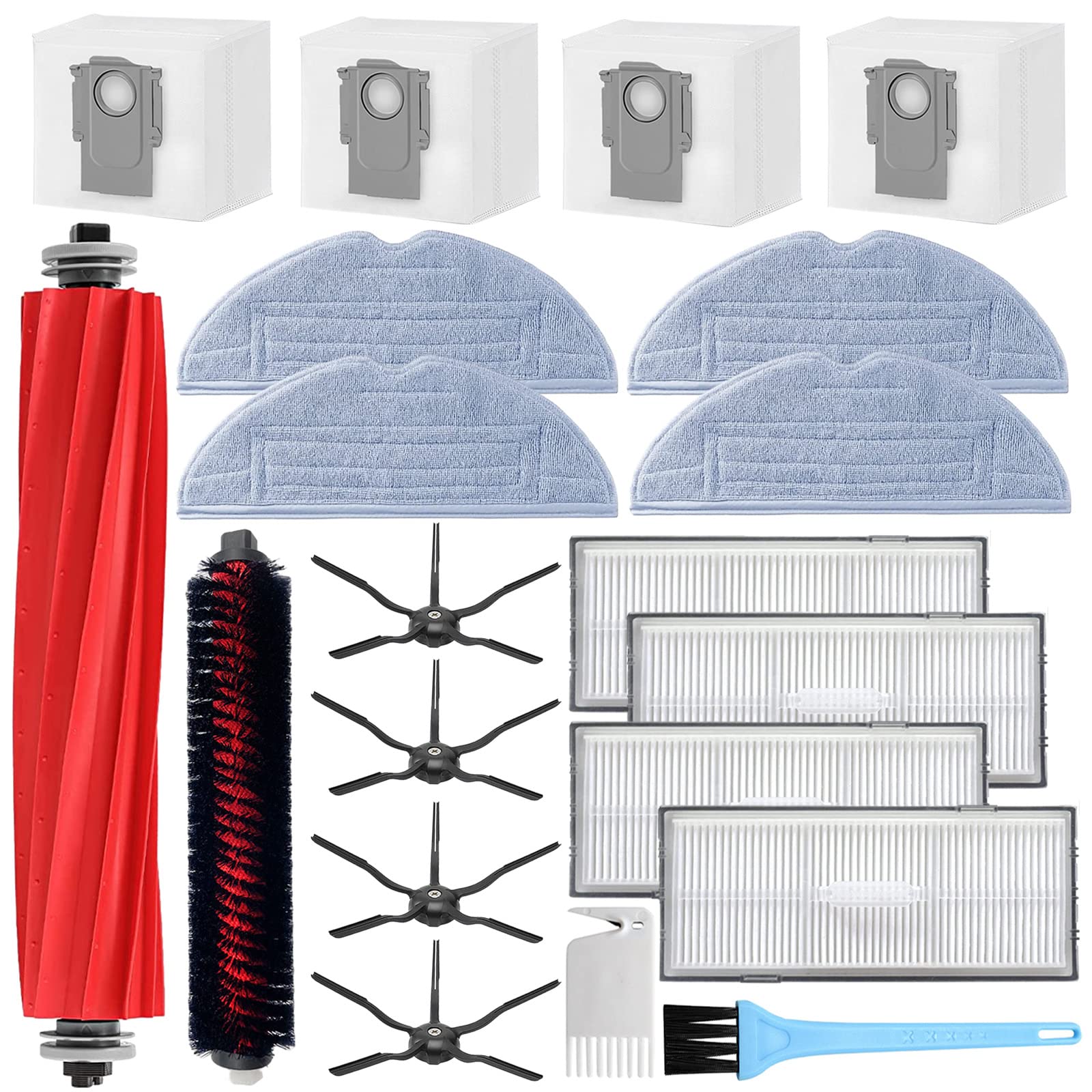
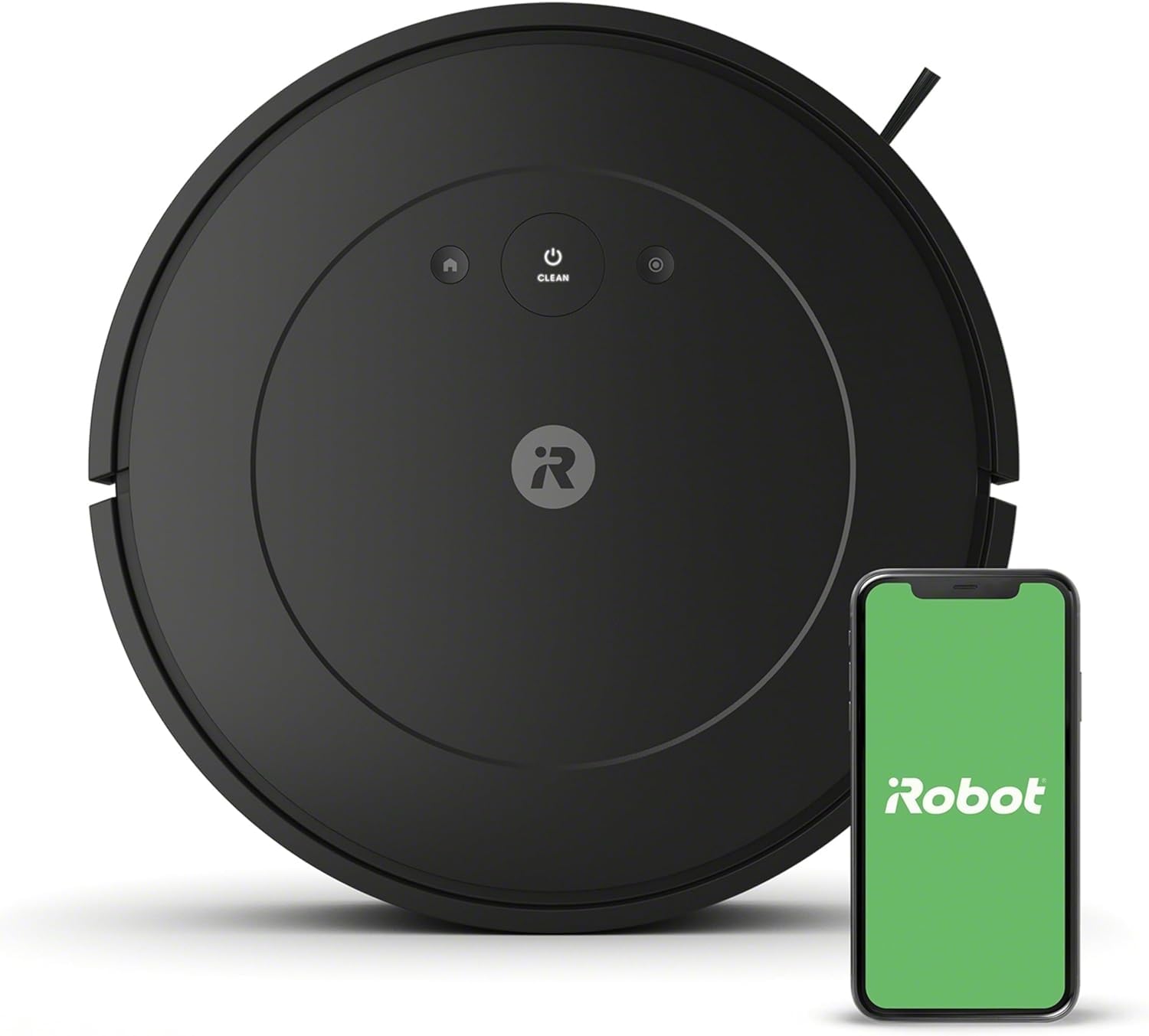
If you’ve never owned a robot vacuum and want to try one without committing to a mortgage, the Roomba Essential is the honest entry point. It doesn’t self-empty, it doesn’t mop, it doesn’t do camera obstacle avoidance — it just vacuums on a schedule using iRobot’s basic navigation. You’ll manually empty the bin every few runs and pick up cables before it runs, but you’re eliminating about 80% of the daily vacuuming burden for the price of a nice dinner out.
Pros
- Low commitment — if you hate it, you’re out $249 not $1,800
- iRobot reliability and support behind it
- Easy setup through the standard iRobot Home app
Cons
- Manual emptying of the dust bin every few runs
- No obstacle avoidance — will bump into furniture and eat cables
The final verdict
The Roborock S8 MaxV Ultra wins because it actually delivers on the “forget vacuums exist” promise — every other premium robot we tested still required occasional human intervention. If $1,800 is a non-starter, the Eufy X10 Pro Omni gets you 90% of that experience for half the money and is the real value pick. And if you just want to try a robot vacuum without committing, the Roomba Essential is the honest entry-level choice that quietly makes your floors cleaner while you do literally anything else.
Questions, honestly.
Are robot vacuums actually good or are they a gimmick?
Modern premium robot vacuums are genuinely good and no longer a novelty. They clean nearly as well as corded vacuums for daily maintenance, especially on hard floors. They won’t replace a deep-cleaning upright for moving furniture or tackling heavy messes once or twice a year, but for keeping floors consistently clean day-to-day they’re excellent. The gimmick era ended around 2022.
Do I still need a regular vacuum if I have a robot vacuum?
Yes, but you’ll use it much less often. The robot handles daily and weekly maintenance — the stuff that used to make you feel guilty. You still want a regular stick vacuum or canister for deep cleaning every few weeks, for moving furniture, getting into tight corners behind chairs, cleaning car interiors, and handling any unexpected liquid spills. Think of the robot as maintenance and the upright as overhaul.
Will a robot vacuum actually avoid cables and cords?
Premium models with camera-based obstacle avoidance (Roborock S8 MaxV Ultra, Roomba Combo j9+) do a genuinely good job. LiDAR-only models like the Roborock Q Revo are hit or miss on thin cables. Cheap models will absolutely eat any cable on the floor. Before buying any robot vacuum, plan to do a basic pick-up pass — a 30-second floor sweep for socks and cables makes every model work dramatically better.
How long do robot vacuums last?
Premium models from iRobot, Roborock, and Eufy typically last 4 to 7 years with regular use and basic maintenance. Cheap models often fail within 2 to 3 years, usually from battery or wheel motor failure. Budget about $30-60 per year in consumable parts like brushes, filters, and mop pads for a premium unit. Batteries can usually be replaced for $60-120 if they’re the only failure point.
Is the mopping feature on robot vacuums actually useful?
On hard floors, yes — for daily maintenance. Premium mopping robots with self-washing pressure pads do a surprisingly good job on everyday dust, light spills, and pet prints. However, stuck-on messes like dried syrup or caked mud still need a real mop and some elbow grease. For tile and hardwood homes the mopping feature is genuinely worth the premium. For fully carpeted homes, skip mopping entirely and get the Shark AI Ultra instead.
Do robot vacuums work well on thick carpet and rugs?
Only the ones with high suction power (7,000 Pa and above). The Roborock S8 MaxV Ultra, Shark AI Ultra, and Roomba Combo j9+ all handle medium-pile carpet well. Thick shag rugs are still a problem for almost any robot — look for a model with auto-detect carpet boost or plan to set no-go zones around the rug. Rugs with tassels are a universal robot vacuum enemy and will cause tangles every time.
Is it worth paying for the auto-empty base station?
If you have pets or allergies, absolutely yes. A 60-day auto-empty bag means you interact with dust maybe six times a year instead of 60 — it’s the single feature that most changes how often you actually think about vacuuming. If you don’t have pets and have a small home, you can skip it and save $200-400. For pet households, it’s the best upgrade on the entire category.